13 April 2021
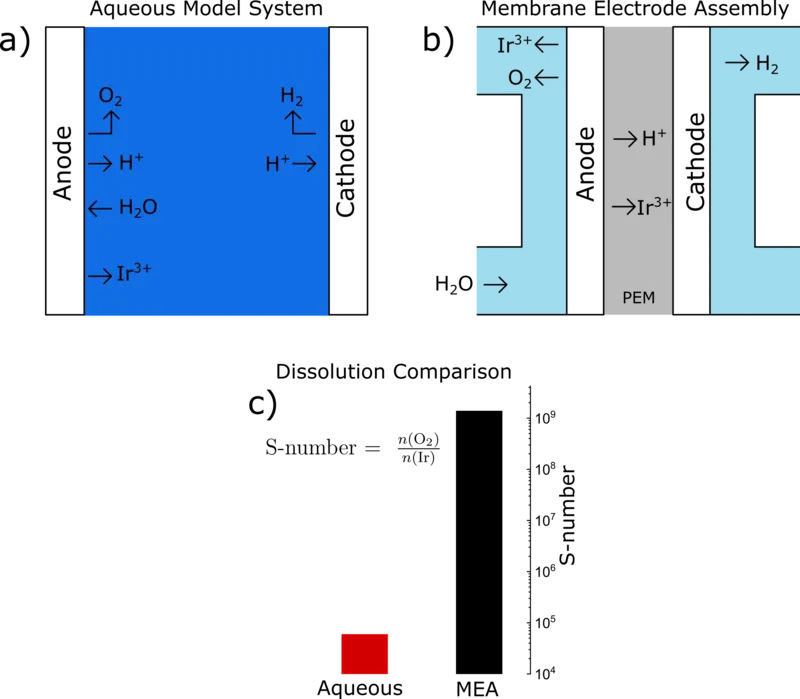
Our new paper On the limitation in assessing the stability of oxygen evolution catalysts using aqueous model electrochemical cells was published today in Nature Communications. In this work, we tackle the discrepancy in the lifetimes of oxygen evolution reaction (OER) electrocatalysts between aqueous model systems (AMS), which are commonly employed in fundamental research and polymer electrolyte membrane based membrane electrode assemblies (MEA), which are state of the art in today's water electrolyzers.
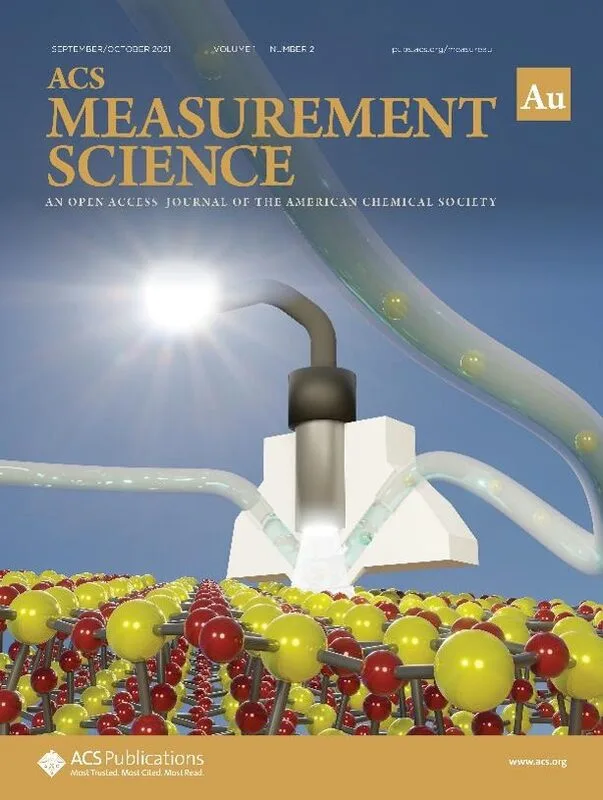
With a newly developed setup, we present the first measurement of real dissolution rate in an MEA system. A striking difference in the stability of an iridium oxide catalyst in the MEA system was observed compared to our established scanning flow cell coupled to an inductively coupled plasma mass spectrometer (SFC-ICP-MS). Thus, a series of measurements in AMS was performed to search for the origins of this discrepancy.
Our results indicate two main contributors being responsible for the dissolution discrepancy—first, a general overestimation of the acidity of the conditions in the MEA. Second, iridium oxide stabilizes in the MEA system on longer timescales.
We expect our findings to lead to a better understanding of OER catalyst degradation and, subsequently, to better performing water electrolyzers.
More details can be found in Nature Communications under the following link: https://doi.org/10.1038/s41467-021-22296-9.